
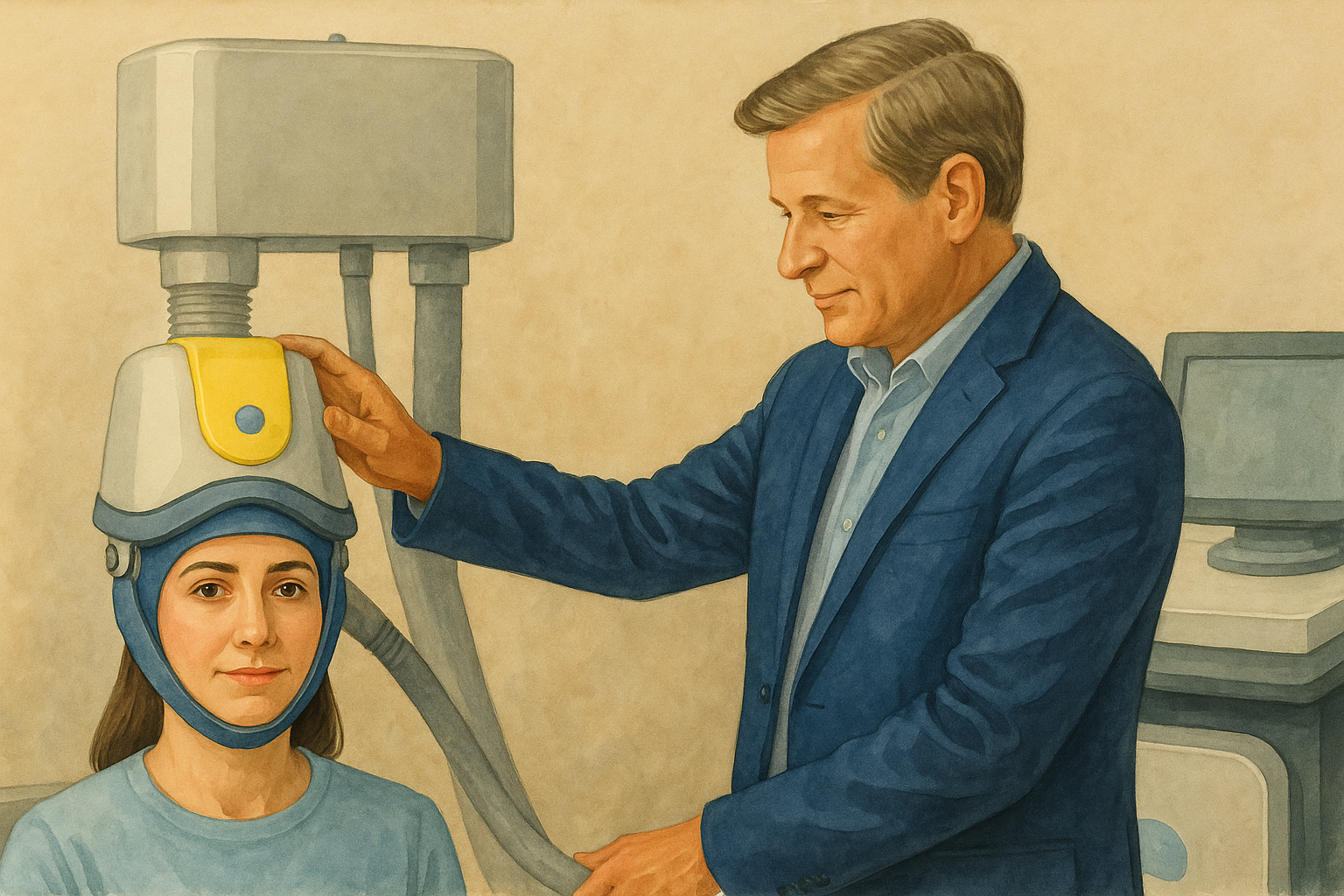
Deep Transcranial Magnetic Stimulation (Deep TMS) is a type of non-invasive brain stimulation treatment developed to help people suffering from depression. While medications work by sending chemicals throughout the whole body, Deep TMS delivers magnetic pulses directly to the areas of the brain responsible for mood regulation. For people who have not received the relief they hoped for through medication and therapy alone, Deep TMS offers an alternative pathway toward recovery.
Deep TMS has been used for over a decade and is FDA-cleared for treating Major Depressive Disorder (MDD). While there are a handful of popular systems in use today, BrainsWay Deep TMS is the most recognized, using an exclusive H-coil for the safe and effective delivery of deep brain stimulation.
What Is the Difference Between TMS and Deep TMS?
Both traditional TMS and Deep TMS use magnetic pulses to stimulate brain cells responsible for mood and emotional regulation. The significant difference between the two is the method through which the treatment reaches and activates the areas of the brain.
Traditional TMS:
- Uses a figure-8 coil
- Mainly targets the surface of the brain (the cortex)
- The target area is narrow, which increases the chance of missing the optimal stimulation zone
Deep TMS:
- Uses a patented H-coil to access a larger and deeper area of the brain
- Activates broader networks related to mood, motivation, and reward
- Reduces the possibility of errors in targeting, since the wider stimulation field does not rely on ultra-precise placement
- Includes a cushioned helmet that maintains consistent coil positioning and stimulation dosage for each session
In short, Deep TMS expands the reach of traditional TMS. It stimulates more neurons and offers a greater therapeutic effect. Consequently, it may lead to higher rates of improvement in patients who failed to respond to traditional treatments or medication alone.
Who Is Deep TMS For?
Deep TMS is typically suggested to adults with depression who:
- Have taken antidepressants but did not see significant relief
- Want a non-invasive treatment that doesn’t require anesthesia or sedation
- Cannot tolerate the side effects of medications
- Want a therapy compatible with their daily routine and that allows them to resume their regular activities directly after treatment
Deep TMS is specifically indicated for patients with Major Depressive Disorder (MDD), including those with treatment-resistant depression (TRD), meaning they have not responded to at least two different antidepressant medications.
How Does Deep TMS Work?
Deep TMS targets the less active areas of the brain by stimulating neural pathways directly. During treatment, the device sends magnetic pulses that stimulate these brain cells. These pulses help:
- Re-establish communication between brain regions
- Strengthen neural pathways involved in mood regulation
- Support the gradual, sustained alleviation of depressive symptoms
A major benefit of Deep TMS is that it works locally. It affects the brain directly, without altering the body’s chemistry. Working on the brain’s electrical activity helps explain its safety and generally mild side-effect profile.
What Does a Deep TMS Session Look Like?
During treatment, you remain fully awake. You sit in a comfortable chair, and a clinician places a cushioned helmet containing a magnetic coil on your head. The device delivers pulses for about 20 minutes during each session. Most patients describe the sensation as a rhythmic tapping on the scalp.
Once the session ends, you can drive, go to work, or resume your normal daily routine. No recovery time is needed. The most common side effects are mild scalp discomfort or headache, which typically improve within the first few sessions.
What Does the Research Show About Clinical Outcomes?
Deep TMS has been extensively researched, particularly for treatment-resistant depression. A study of twenty different mental health centers, published in World Psychiatry in 2015, reported that about one-third of patients were in remission after four weeks, and more than 80% showed symptom improvement with continued treatment.
BrainsWay also reported real-world evidence from more than 1,300 patients indicating that approximately 4 out of 5 patients respond to treatment, and 2 out of 3 achieve remission after at least 30 sessions.
These findings reinforce Deep TMS as an effective, well-tolerated option for individuals who have not found relief through other treatments.
Deep TMS vs. Medication Alone
Medications can be effective, but they rely on the body’s absorption, metabolism, and chemical signaling. This often means:
- Weeks or months before seeing improvement
- Trying multiple medications and dosages to find the right fit
- Side effects such as nausea, weight changes, sleep disturbances, or sexual dysfunction
Deep TMS works differently. It directly targets brain regions involved in depression and promotes neuroplasticity without altering body chemistry. Research also suggests that combining Deep TMS with medication can provide greater symptom relief than medication alone. Most patients use Deep TMS alongside therapy or medication as part of a comprehensive treatment plan.
Is Deep TMS Covered by Insurance?
Yes, Deep TMS is covered by most major insurance companies for the treatment of MDD, provided certain criteria are met. While requirements vary by insurer, most people qualify if they have tried two or more antidepressants without relief or have shown limited improvement in therapy.
Deep TMS in Austin: Deep Centered Mental Health
At Deep Centered Mental Health in Austin, we offer Deep TMS with skilled clinicians, proven technology, and a patient-focused environment. Our team provides an introductory assessment, a tailored treatment schedule, and support throughout your treatment sessions.
Your path to lasting relief starts here. Call us at 512-894-9026, click here to request a TMS Consultation, or schedule your appointment now without having to speak with anyone.