
You’ve been thinking about starting therapy or finding a new psychiatrist. You know you need support, but your schedule is packed. Or maybe the providers near you don’t specialize in what you’re dealing with. You’ve heard about online therapy, but you’re not sure if it’s actually effective. Or if it’ll feel weird talking to someone through a screen.
Those concerns make sense. Telehealth mental health services are relatively new for a lot of people. But here’s what we’ve seen at Deep Centered Mental Health: when done right, online therapy and psychiatry work just as well as in-person care. And for many people, it works better because it actually fits into their lives.
We built our practice around making high-quality mental health care accessible throughout Texas. That means connecting you with some of the best therapists and psychiatrists in the state without the waitlists, without the commute, and without compromising on clinical expertise.
Let’s clear up what telehealth mental health care actually looks like and whether it might be the right fit for you.
What Does A Telehealth Therapy Session Actually Look Like?
It’s simpler than you might think.
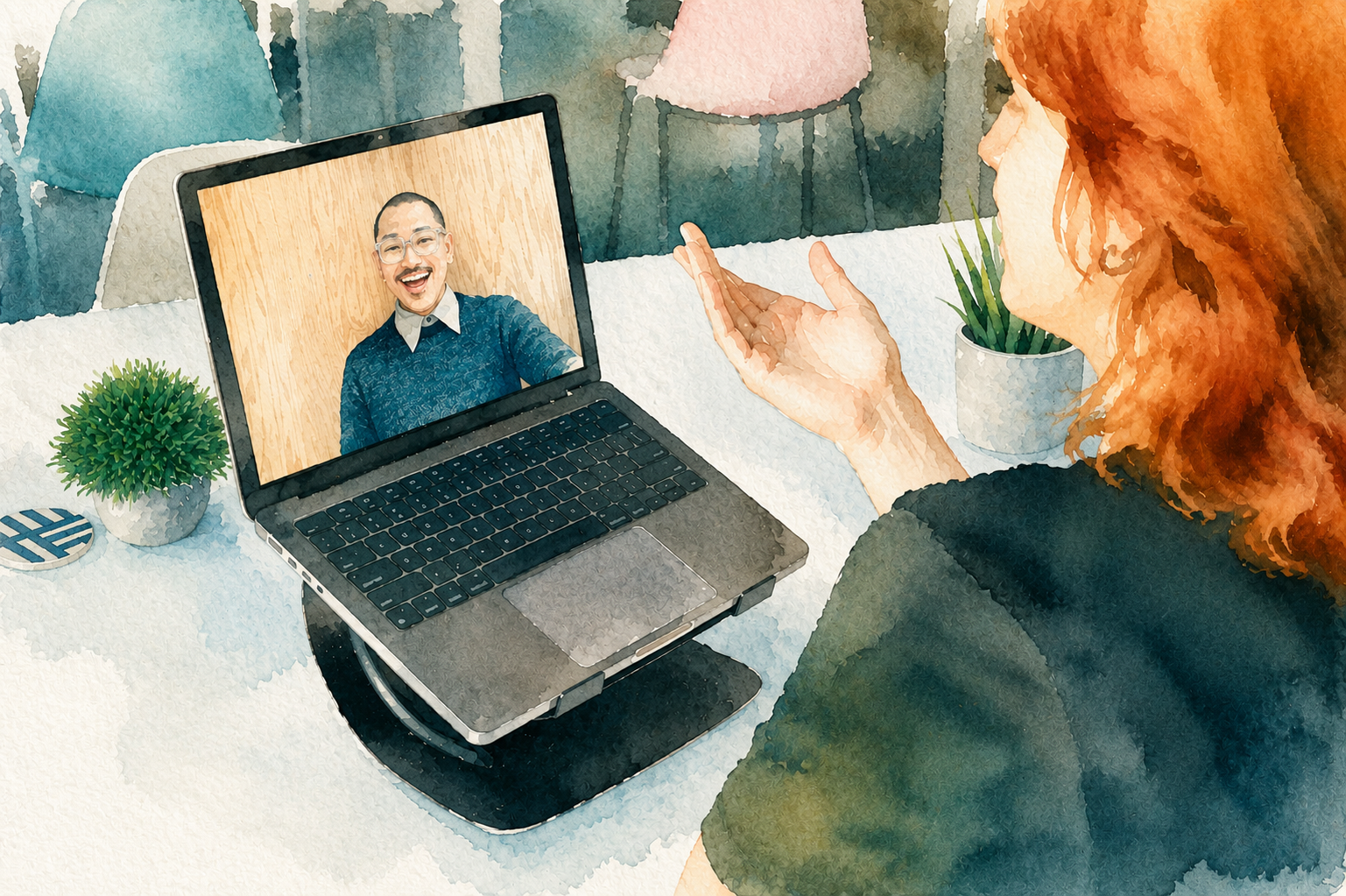
You log into a secure video platform from your phone, tablet, or computer. Your therapist or psychiatrist appears on screen. You talk, just like you would in an office. Except you’re in your own space.
No waiting room. No commute. No wondering if you’ll run into someone you know in the parking lot.
The clinical work is identical to in-person sessions. Your provider asks questions, listens, develops a treatment plan with you. If you’re meeting with a psychiatrist for medication management, they’ll assess your symptoms and prescribe accordingly. If you’re in therapy, you’ll work through the same evidence-based approaches (CBT, DBT, trauma-focused therapy, EMDR) that happen in traditional office settings.
At Deep Centered Mental Health, our clinicians are trained across the full spectrum of treatment modalities. That means your treatment gets tailored to what actually helps you, not just what your provider happens to know.
The technology isn’t complicated. Most people figure it out in under a minute. And if something goes wrong with the connection, you just reconnect. It happens occasionally, and it’s not a big deal.
Does Online Therapy Actually Work?
Research consistently shows that telehealth therapy is as effective as in-person therapy for most mental health conditions. That includes depression, anxiety, PTSD, and OCD. The therapeutic relationship, which is the biggest predictor of success in therapy, develops just as strongly over video.
People worry that something will be “lost” through a screen. But think about it: therapy works because of the connection between you and your provider, the skills you learn, and the insights you gain. None of that requires being in the same room.
Our patients at Deep Centered Mental Health consistently report that telehealth feels natural after the first session or two. Some actually prefer it because it feels less intimidating. You’re in your own environment. That can make it easier to open up, especially in early sessions when you’re still building trust.
For psychiatry, telehealth is especially practical. Medication management appointments are often brief and focused on symptom updates and prescription adjustments. Those conversations translate perfectly to video visits.
The Practical Benefits Of Virtual Mental Health Care In Texas
Mental health providers are concentrated in major cities like Austin, Houston, Dallas, San Antonio, and Fort Worth. If you live in smaller communities like Georgetown, Round Rock, Cedar Park, Pflugerville, Kyle, Lakeway, or rural areas across the state, your local options might be limited.
Telehealth gives you access to providers throughout Texas who specialize in exactly what you’re dealing with. Whether that’s depression, anxiety, trauma, OCD, perinatal mental health, ADHD, bipolar disorder, or something else.
Deep Centered Mental Health has clinicians who are experts in the full range of mental health conditions. You’re not getting someone who “also treats” your condition. You’re getting a specialist.
Scheduling flexibility: Our telehealth providers offer flexible scheduling options that fit your busy life. You don’t have to leave work early or arrange childcare. You can take a session during your lunch break or after the kids are in bed.
Geographic freedom: You can be anywhere in Texas. As long as you have privacy and a decent internet connection, you’re set.
Continuity of care: If you travel for work or split time between locations, you don’t have to pause treatment. Your provider stays the same regardless of where you are physically.
No waitlists: Most practices in Texas have waitlists stretching weeks or months. At Deep Centered Mental Health, we’ve built our team specifically so you can start this week. When you’re ready to get help, you shouldn’t have to wait.
Common Concerns About Telehealth Mental Health Services
Will it feel awkward?
Maybe for the first five minutes. Then you adjust. Most people forget they’re on video pretty quickly once the conversation starts.
What about privacy?
Telehealth platforms are HIPAA-compliant and encrypted. Your sessions are as private as in-person appointments. Arguably more so, since you control your environment. Just make sure you’re in a space where you won’t be overheard.
What if my internet cuts out?
It happens occasionally. Your provider will call you, or you’ll rejoin the session. It’s a minor inconvenience, not a dealbreaker.
Can my provider really understand me through a screen?
Yes. Therapists and psychiatrists are trained to pick up on verbal and nonverbal cues in telehealth settings. They can see your facial expressions, hear your tone, and notice when something shifts. The clinical assessment is just as thorough.
What if I need a higher level of care?
Your provider will assess that just like they would in person. If you need a higher level of care, your provider will explore different options with you.
Who Does Well with Online Therapy and Psychiatry? Telehealth works well for most people. But it’s especially helpful if you:
- Have a busy or unpredictable schedule
- Live in an area with limited mental health providers
- Prefer the comfort of your own space
- Have mobility issues or chronic health conditions that make traveling difficult
- Want to avoid exposure to illness in waiting rooms
- Feel more comfortable opening up from home
- Need medication management for depression, anxiety, ADHD, or other conditions that don’t require frequent in-person monitoring
- Want access to specialized treatment without the waitlist
It’s less ideal if you’re in acute crisis, need intensive in-person monitoring, or don’t have reliable access to internet and privacy.
What About Insurance For Telehealth In Texas?
Most major insurance plans in Texas now cover telehealth mental health services the same way they cover in-person visits. At Deep Centered Mental Health, we’re in-network with most major plans. That means you’ll typically pay the same copay or coinsurance you’d pay for an office visit. If you’re unsure about your coverage, please give us a call and we can review your plan and provide you with a free quote.
Getting Started With Telehealth Mental Health Care In Texas
If you’ve been putting off therapy or psychiatry because logistics felt impossible, telehealth might be exactly what you need.
You don’t have to commit to it forever. Try a few sessions. See how it feels. Most people are surprised by how natural it becomes.
At Deep Centered Mental Health, our team provides online therapy and psychiatry throughout Texas. We have some of the best clinicians in the state, and they specialize in anxiety, depression, trauma, PTSD, OCD, ADHD, bipolar disorder, and perinatal mental health. All of our providers are licensed in Texas and experienced in telehealth care.
If you’re ready to learn more or schedule an appointment with us, please call 512-887-6809 or click here to schedule an appointment today.