
Anxiety responds well to treatment. Therapy and medication are both effective options for many anxiety disorders, and deciding where to start involves looking at your symptoms, treatment history, and preferences.
Anxiety can gradually affect how you go about your day. You might spend far more time worrying about a work situation than the situation itself warrants. You may have started avoiding activities because you’re anticipating everything that could go wrong.
At Deep Centered Mental Health, our Houston office offers therapy and psychiatry within the same practice. Patients can begin with either service and receive coordinated care if both become part of their treatment.
When Is Anxiety Worth Treating?
Anxiety deserves attention when worry becomes difficult to control or starts affecting your everyday life. You might notice that you’re sleeping poorly or having trouble concentrating at work. Physical symptoms such as headaches, muscle tension, and stomach discomfort are also common.
Some people begin avoiding situations because of anxiety. That might mean turning down invitations, putting off responsibilities, or changing routines to avoid something they’re worried about.
Panic attacks can be particularly frightening. They can involve a pounding heart, shortness of breath, dizziness, and a feeling that something terrible is about to happen. Because these symptoms can also have medical causes, new or unexplained physical symptoms should be evaluated by a healthcare professional.
You don’t need an anxiety diagnosis to schedule an appointment.
How Does Therapy Help With Anxiety?
Cognitive behavioral therapy (CBT) is one of the most researched treatments for anxiety disorders. It helps people recognize thinking patterns that contribute to worry and change behaviors that keep anxiety going.
Say you’re reluctant to speak during meetings because you’re worried about making a mistake. In CBT, you might examine that fear and gradually practice participating rather than continuing to avoid speaking up.
Exposure therapy is an important component of CBT for many anxiety disorders, particularly phobias and panic disorder. It involves approaching feared situations gradually, with guidance from a therapist, so that avoidance no longer controls your decisions.
Our Houston therapists use CBT and other therapeutic approaches, including EMDR when anxiety is connected to traumatic experiences.
Christine Sanchez, LPC, is one of our Houston therapists. She incorporates CBT, Acceptance and Commitment Therapy (ACT), and Dialectical Behavior Therapy (DBT) into her work. Describing what patients can expect, Christine shares:
“Early sessions focus on practical tools, identifying core values, and setting value-based goals that align with their personal growth and healing.”
Therapy is available in person at our Houston office or through telehealth anywhere in Texas.
How Does Medication Help With Anxiety?
Medication can reduce anxiety symptoms, particularly when worry or fear is interfering significantly with daily life.
SSRIs and SNRIs are commonly prescribed for several anxiety disorders. They generally take several weeks to reach their full effect. During follow-up appointments, your psychiatric provider will ask about changes in your symptoms and any side effects you’re experiencing.
Your medical history and previous experiences with psychiatric medications help inform which treatment options your provider recommends.
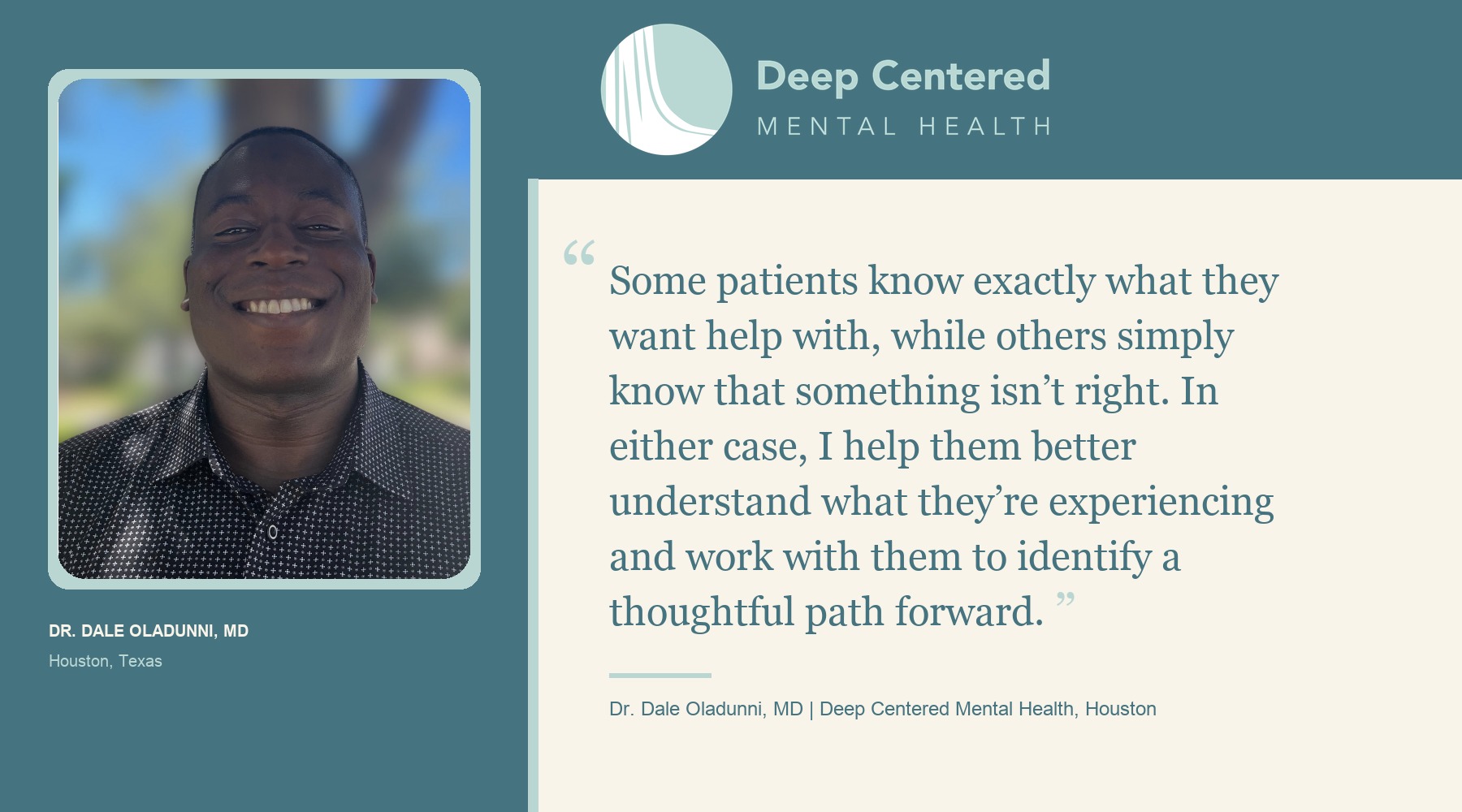
Our Houston psychiatric team includes Dale Oladunni, MD, and Bisi Ogunkelu, PNP.
Dr. Oladunni describes one of his goals for patients:
“I want patients to leave our time together feeling more confident in navigating challenges”
Psychiatric appointments are available in person and through telehealth.
Therapy, Medication, or Both: How Do You Decide?
Both CBT and certain medications are recommended first-line treatments for several anxiety disorders. You don’t necessarily need to try one before the other.
If you’d prefer to begin without medication, CBT has strong evidence supporting its effectiveness. A psychiatric evaluation is also a reasonable starting point, particularly if anxiety is interfering significantly with daily life or previous treatment hasn’t helped enough.
Some patients benefit from combining therapy and medication. Your clinician can discuss whether that approach makes sense based on the type of anxiety you’re experiencing and how you’ve responded to treatment in the past.
Because Deep Centered Mental Health offers both services, your therapist and psychiatric provider can coordinate care when needed.
What If Your First Treatment Isn’t Working?
If you’ve been attending therapy without noticing much improvement, tell your therapist. They can review your progress, adjust the approach, or discuss whether a psychiatric evaluation would be helpful.
Medication requires follow-up as well. Your provider will monitor how you’re responding and discuss adjustments if symptoms aren’t improving or side effects are difficult to tolerate.
Don’t stop taking prescribed psychiatric medication or change your dosage without speaking with your prescriber. Some medications can cause withdrawal symptoms or other problems when stopped abruptly.
What Does Starting Anxiety Treatment in Houston Look Like?
The intake process takes approximately 10 minutes, and you can get started online or by phone. No referral is needed. Most new patients are seen within the same week they contact us, with no waitlist.
Our Houston office is located at 4126 Southwest Freeway, Suite 600, Houston, TX 77027, in the Greenway Plaza area. Secure on-site parking is available.
Telehealth appointments are also available throughout Texas.
We accept most major insurance plans, including Aetna, Blue Cross Blue Shield, UnitedHealthcare, Cigna, and Humana. Self-pay and sliding-scale options are available, and our team can verify your benefits before your first appointment.
You can learn more about our office and clinicians on our Houston location page.
Frequently Asked Questions About Anxiety Treatment
Can anxiety be treated without medication?
Yes. CBT is effective for many anxiety disorders, and some patients improve with therapy alone.
How long does anxiety treatment take?
A course of CBT often involves approximately 12–20 sessions, although treatment length varies. SSRIs and SNRIs generally take several weeks to reach their full effect. Your clinician will review your progress throughout treatment.
Can I see a therapist and a psychiatric provider at the same practice?
Yes. Our Houston office offers both services, and our clinicians can coordinate your treatment.
Does insurance cover anxiety treatment?
Many insurance plans cover outpatient therapy and psychiatric appointments. Your coverage, copays, and deductibles depend on your specific plan. Our intake team can help verify your benefits.
When Should You Get Immediate Help?
If you’re thinking about suicide or hurting yourself, call or text 988 to reach the Suicide & Crisis Lifeline. If you’re in immediate danger, call 911 or go to the nearest emergency department.
Chest pain, severe trouble breathing, or symptoms that could indicate a heart attack require emergency medical attention, even if you suspect anxiety is responsible.
Start Anxiety Treatment in Houston
If anxiety is interfering with your daily life, you can book an appointment online or call 512-956-6463.
Our intake team can help you decide whether to begin with therapy or a psychiatric appointment.